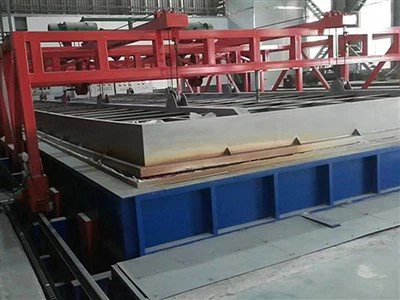
As a supplier of Rotary Heat Treatment Equipment, I understand the growing demand for energy - efficient solutions in the heat treatment industry. Energy efficiency not only reduces operational costs but also contributes to a more sustainable and environmentally friendly manufacturing process. In this blog, I will share some effective strategies to improve the energy efficiency of rotary heat treatment equipment.
1. Optimize Insulation
One of the most fundamental steps in enhancing energy efficiency is to ensure proper insulation of the rotary heat treatment equipment. High - quality insulation materials can significantly reduce heat loss. When heat is retained within the equipment, less energy is required to maintain the desired temperature.
For rotary heat treatment equipment, insulation should be applied to all exposed surfaces, including the furnace walls, doors, and any piping. Fiberglass, ceramic fiber, and calcium silicate are commonly used insulation materials. Fiberglass is cost - effective and has good thermal resistance. Ceramic fiber, on the other hand, can withstand higher temperatures and is more suitable for high - temperature heat treatment processes. Calcium silicate offers excellent insulation properties and is resistant to moisture.
By investing in high - performance insulation, you can minimize heat transfer to the surrounding environment, leading to substantial energy savings over time. For more information about our Rotary Heat Treatment Equipment, please visit our website.
2. Implement Advanced Temperature Control Systems
Accurate temperature control is crucial for energy - efficient heat treatment. Traditional temperature control methods may lead to over - heating or under - heating, which not only wastes energy but also affects the quality of the heat - treated products.


Advanced temperature control systems, such as programmable logic controllers (PLCs) and proportional - integral - derivative (PID) controllers, can precisely regulate the temperature within the rotary heat treatment equipment. These systems continuously monitor the temperature and adjust the heating elements accordingly. For example, a PID controller can calculate the difference between the set temperature and the actual temperature and then adjust the power input to the heating elements to maintain a stable temperature.
In addition, using sensors with high accuracy can provide real - time temperature data, enabling the control system to make more precise adjustments. By maintaining a consistent temperature, the equipment can operate more efficiently, reducing energy consumption.
3. Upgrade Heating Elements
The efficiency of heating elements directly affects the energy consumption of rotary heat treatment equipment. Over time, heating elements may degrade, leading to reduced efficiency. Upgrading to more energy - efficient heating elements can significantly improve the overall energy performance of the equipment.
There are several types of heating elements available, such as resistance heating elements, induction heating elements, and infrared heating elements. Resistance heating elements are widely used due to their simplicity and relatively low cost. However, induction heating elements are more energy - efficient as they heat the workpiece directly through electromagnetic induction, minimizing heat loss. Infrared heating elements can also provide rapid and targeted heating, reducing the heating time and energy consumption.
When choosing heating elements, consider factors such as the required temperature range, heating rate, and the type of workpiece. By selecting the most suitable heating elements for your specific application, you can achieve better energy efficiency.
4. Recover Waste Heat
Rotary heat treatment equipment generates a significant amount of waste heat during the heating process. Instead of letting this heat go to waste, it can be recovered and reused. There are several ways to recover waste heat.
One common method is to use a heat exchanger. A heat exchanger can transfer the waste heat from the exhaust gases to a fluid, such as water or air. The heated fluid can then be used for pre - heating the incoming workpiece, space heating, or other industrial processes. This reduces the amount of energy required to heat the workpiece or the facility, improving overall energy efficiency.
Another approach is to use a regenerative burner system. In a regenerative burner system, the exhaust gases are used to pre - heat the combustion air. This pre - heated air is then used in the combustion process, reducing the energy required to heat the air and increasing the efficiency of the burner.
5. Optimize Process Parameters
The process parameters of rotary heat treatment, such as heating time, heating rate, and holding time, have a significant impact on energy consumption. By optimizing these parameters, you can reduce the energy required for the heat treatment process.
For example, reducing the heating time can save energy. This can be achieved by increasing the heating rate, but it should be done carefully to ensure that the workpiece is heated evenly and does not experience thermal stress. The holding time, which is the time the workpiece is maintained at the desired temperature, can also be optimized. By determining the minimum holding time required to achieve the desired material properties, you can avoid unnecessary energy consumption.
In addition, adjusting the cooling rate can also affect energy efficiency. A slower cooling rate may require less energy, but it should be balanced with the need to achieve the desired material structure and properties.
6. Regular Maintenance
Regular maintenance of rotary heat treatment equipment is essential for maintaining energy efficiency. Over time, equipment components may wear out, leading to increased energy consumption. For example, worn - out seals can cause heat leakage, and dirty heating elements may have reduced efficiency.
By performing regular maintenance, such as cleaning the heating elements, checking and replacing seals, and lubricating moving parts, you can ensure that the equipment operates at its optimal efficiency. Regular inspections can also help detect potential problems early, preventing costly breakdowns and energy - wasting malfunctions.
7. Comparison with Other Heat Treatment Equipment
It's also worth comparing rotary heat treatment equipment with other types of heat treatment equipment, such as Vertical Heat Treatment Equipment and Roller Hearth Heat Treatment Equipment. Each type of equipment has its own advantages and disadvantages in terms of energy efficiency.
Vertical heat treatment equipment typically has a smaller footprint and can be more suitable for certain types of workpieces. However, it may have different energy consumption characteristics compared to rotary heat treatment equipment. Roller hearth heat treatment equipment is often used for continuous heat treatment processes, and its energy efficiency depends on factors such as the conveyor speed and the heating system.
When choosing heat treatment equipment, it's important to consider the specific requirements of your application and compare the energy efficiency of different types of equipment.
In conclusion, improving the energy efficiency of rotary heat treatment equipment requires a comprehensive approach that includes optimizing insulation, implementing advanced temperature control systems, upgrading heating elements, recovering waste heat, optimizing process parameters, and performing regular maintenance. By implementing these strategies, you can not only reduce energy costs but also contribute to a more sustainable manufacturing process.
If you are interested in our Rotary Heat Treatment Equipment and want to discuss how we can help you improve energy efficiency in your heat treatment processes, please feel free to contact us for a detailed consultation. We are committed to providing high - quality, energy - efficient solutions to meet your specific needs.
References
- "Heat Treatment Handbook", ASM International
- "Energy Efficiency in Industrial Processes", International Energy Agency
- "Advanced Temperature Control Systems for Heat Treatment", Journal of Heat Treatment Technology