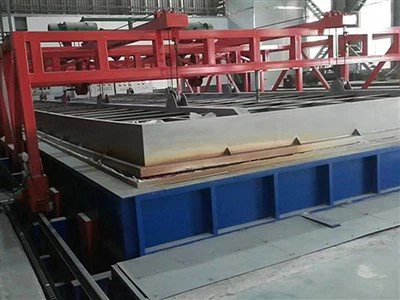
As a supplier of Rotary Furnace Liners, ensuring the highest quality of our products is of utmost importance. The liner of a rotary furnace plays a crucial role in the overall performance and longevity of the furnace. It protects the furnace shell from high - temperature and corrosive environments, and also helps in maintaining the desired temperature inside the furnace. In this blog, we will explore the various quality control measures that we implement to ensure that our Rotary Furnace Liners meet the highest standards.
Material Selection
The first step in quality control is the careful selection of materials. We source our raw materials from trusted suppliers who have a proven track record of providing high - quality refractory materials. The choice of material depends on several factors such as the operating temperature of the furnace, the type of materials being processed, and the chemical environment inside the furnace.
For high - temperature applications, we often use materials like alumina, magnesia, and zirconia. These materials have excellent thermal stability and can withstand extreme temperatures without significant degradation. For example, alumina has a high melting point and good thermal shock resistance, making it suitable for use in furnaces where rapid heating and cooling cycles are common.
We also conduct thorough material testing before using them in the production of Rotary Furnace Liners. This includes tests for chemical composition, density, porosity, and thermal conductivity. By ensuring that the materials meet our strict specifications, we can guarantee the quality and performance of our liners.
Manufacturing Process Control
The manufacturing process of Rotary Furnace Liners is another critical aspect of quality control. We follow a well - defined manufacturing process that includes several stages such as mixing, forming, drying, and firing.
During the mixing stage, we use precise measuring equipment to ensure that the correct proportions of raw materials are used. This helps in achieving a homogeneous mixture, which is essential for the quality of the final product. The mixing process is also carefully monitored to ensure that there are no lumps or impurities in the mixture.
Forming the liner is a delicate process that requires skilled operators. We use advanced forming techniques such as isostatic pressing and extrusion to ensure that the liner has the correct shape and dimensions. These techniques also help in improving the density and strength of the liner.
After forming, the liners are dried in a controlled environment to remove any moisture. This is an important step as excessive moisture can cause cracking and other defects during the firing process. The drying process is carefully monitored to ensure that the liners are dried evenly and at the correct temperature.
The firing process is the final stage in the manufacturing of Rotary Furnace Liners. We use high - temperature kilns to fire the liners at specific temperatures and for a specific duration. This helps in developing the desired properties of the liner, such as strength, hardness, and thermal stability. The firing process is closely monitored to ensure that the liners are fired correctly and that there are no defects.
Quality Inspection
Quality inspection is an integral part of our quality control measures. We conduct a series of inspections at various stages of the manufacturing process to ensure that the Rotary Furnace Liners meet our quality standards.
In - process inspections are carried out during the manufacturing process to detect any potential defects early. This includes visual inspections, dimensional checks, and non - destructive testing. Visual inspections are used to check for surface defects such as cracks, chips, and uneven surfaces. Dimensional checks are used to ensure that the liners have the correct size and shape. Non - destructive testing techniques such as ultrasonic testing and X - ray testing are used to detect internal defects that may not be visible to the naked eye.
Final inspections are carried out before the liners are shipped to the customers. These inspections include a comprehensive check of all the properties of the liners, such as density, porosity, thermal conductivity, and strength. We also conduct performance tests to ensure that the liners can withstand the operating conditions of the furnace.
Quality Assurance System
We have a comprehensive quality assurance system in place to ensure that all our products meet the highest quality standards. Our quality assurance system is based on international standards such as ISO 9001. This system includes procedures for quality planning, quality control, and quality improvement.
We regularly review and update our quality assurance system to ensure that it remains effective and relevant. We also conduct internal audits and management reviews to identify areas for improvement and to ensure that our quality control measures are being implemented correctly.


Customer Feedback
Customer feedback is an important part of our quality control process. We encourage our customers to provide feedback on our products and services. This feedback helps us to identify areas for improvement and to make necessary changes to our products and processes.
We also use customer feedback to develop new products and to improve the performance of our existing products. By listening to our customers, we can ensure that our Rotary Furnace Liners meet their specific needs and requirements.
Comparison with Pit Furnace Liners
While Rotary Furnace Liners have their own unique features and applications, it is also important to compare them with Pit Furnace Liners. Pit furnace liners are used in pit - type furnaces, which are typically used for heat treatment processes.
The main difference between Rotary Furnace Liners and Pit Furnace Liners lies in their design and application. Rotary Furnace Liners are designed to withstand the rotational movement of the furnace, while Pit Furnace Liners are designed to fit into the pit - type structure of the furnace.
In terms of materials, both types of liners use similar refractory materials, but the selection may vary depending on the specific requirements of the furnace. For example, Pit Furnace Liners may require materials with better insulation properties to reduce heat loss, while Rotary Furnace Liners may require materials with better wear resistance to withstand the rotational forces.
Conclusion
In conclusion, as a Rotary Furnace Liner supplier, we are committed to providing high - quality products to our customers. Our quality control measures, which include material selection, manufacturing process control, quality inspection, quality assurance system, and customer feedback, ensure that our Rotary Furnace Liners meet the highest standards.
If you are in the market for high - quality Rotary Furnace Liners, we invite you to contact us for a detailed discussion about your requirements. We are confident that our products will meet your needs and provide you with long - lasting performance.
References
- "Refractory Materials Handbook", John Wiley & Sons
- "Furnace Design and Operation", Elsevier