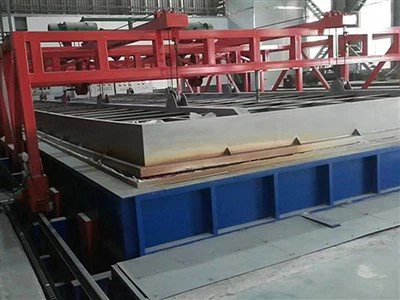
Hey there! As a supplier of Bogie Type Furnaces, I'm super excited to take you on a journey through how the components of these amazing furnaces work together. It's like a well - choreographed dance, where each part plays a crucial role in making the whole system function smoothly.


Let's start with the bogie itself. The bogie is essentially a movable platform that can carry the load in and out of the furnace. It's like a little truck that shuttles the materials you want to heat. The bogie is designed to be sturdy and reliable, able to handle heavy loads. It has wheels that run on tracks, which are usually made of high - strength steel. This allows the bogie to move in and out of the furnace with ease. The movement of the bogie is controlled by a motor, which is connected to a gearbox. This setup ensures that the bogie moves at a consistent speed, whether it's entering or exiting the furnace.
Next up is the furnace chamber. This is where the magic happens. The chamber is insulated to prevent heat loss. We use high - quality insulation materials like ceramic fiber blankets. These blankets are not only great at keeping the heat inside but also lightweight, which helps in reducing the overall weight of the furnace. The walls of the chamber are lined with refractory bricks. These bricks can withstand extremely high temperatures without melting or deforming. They act as a protective layer, ensuring that the heat is contained within the chamber and doesn't damage the outer structure of the furnace.
The heating elements are another vital component. In a bogie type furnace, we often use electric heating elements. These elements are made of materials like nichrome or silicon carbide. When an electric current passes through them, they heat up and transfer the heat to the materials inside the furnace. The heating elements are strategically placed inside the chamber to ensure uniform heating. We can control the temperature by adjusting the power supply to these elements. This gives us a high level of precision when it comes to heating the materials.
Now, let's talk about the control system. The control system is like the brain of the furnace. It monitors and regulates various parameters such as temperature, pressure, and the movement of the bogie. We use advanced programmable logic controllers (PLCs) to manage these functions. The PLCs are connected to sensors placed throughout the furnace. For example, temperature sensors are used to measure the temperature inside the chamber. If the temperature goes above or below the set value, the control system can adjust the power supply to the heating elements accordingly.
The ventilation system is also an important part of the furnace. It helps in removing any harmful gases or fumes that are produced during the heating process. The ventilation system consists of fans and ducts. The fans draw in fresh air and expel the hot, contaminated air out of the furnace. This not only keeps the working environment safe but also helps in maintaining the efficiency of the furnace.
When all these components work together, it's a beautiful sight. The bogie moves the load into the furnace chamber. The heating elements start to heat up, and the control system ensures that the temperature is just right. The ventilation system keeps the air clean, and the insulation keeps the heat where it should be.
If you're in the market for a furnace, you might also be interested in other types of industrial furnaces. Check out our Pit Type Industrial Furnace, Horizontal Industrial Furnace, and Rotary Industrial Furnace. These furnaces have their own unique features and applications, and they might be a perfect fit for your specific needs.
If you're looking to purchase a bogie type furnace or any of the other industrial furnaces we offer, we're here to help. We can provide you with detailed information about the products, including specifications, pricing, and installation services. Just reach out to us, and we'll start a conversation about how we can meet your requirements.
References:
- Industrial Furnace Handbook: Principles, Design, and Operation.
- Advanced Materials for High - Temperature Applications in Furnaces.