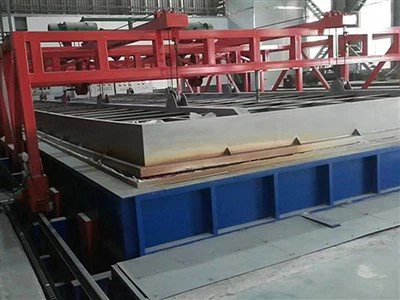
Hey there! As a supplier of Rotary Gas Fired Furnaces, I'm super excited to share with you how these amazing machines work. So, let's dive right in!
What is a Rotary Gas Fired Furnace?
First off, a Rotary Gas Fired Furnace is a specialized piece of equipment used in various industrial processes. It's designed to heat materials to high temperatures efficiently and consistently. The "rotary" part means that the furnace has a rotating chamber, which helps in achieving uniform heating. This type of furnace is commonly used in applications like heat treatment, melting metals, and ceramics production.
How Does It Work?
1. Gas Supply and Combustion
The process starts with the gas supply. Natural gas or other combustible gases are fed into the furnace through a precisely controlled system. The gas is mixed with air in the right proportions to ensure complete combustion. This mixture is then ignited in the combustion chamber. The combustion process releases a large amount of heat energy, which is the primary source of heat for the furnace.
The burners in the furnace are designed to distribute the flame evenly across the rotating chamber. This ensures that the heat is spread uniformly, so all the materials inside the furnace are heated consistently. The combustion process is carefully monitored and controlled to maintain the desired temperature and efficiency.
2. Rotating Chamber
The rotating chamber is the heart of the Rotary Gas Fired Furnace. As the chamber rotates, the materials inside are constantly tumbled and exposed to the heat. This rotation helps in several ways. Firstly, it ensures that all parts of the material are heated evenly. Without rotation, some parts might be overheated while others remain under - heated. Secondly, it helps in the mixing of the materials, which can be crucial in processes like alloying or blending.
The rotation speed of the chamber can be adjusted according to the specific requirements of the process. For example, in some applications where a gentle mixing is needed, the rotation speed might be set lower. In other cases, where a more vigorous mixing is required, a higher rotation speed can be used.


3. Heat Transfer
Once the heat is generated by the combustion process, it needs to be transferred to the materials inside the furnace. There are three main ways of heat transfer in a Rotary Gas Fired Furnace: conduction, convection, and radiation.
Conduction occurs when the heat is transferred from the hot walls of the chamber to the materials in direct contact with them. The rotating motion of the chamber helps in increasing the contact area between the materials and the hot walls, enhancing the conduction process.
Convection is the transfer of heat through the movement of hot gases. As the hot gases rise inside the chamber, they carry the heat with them and transfer it to the materials. The rotation of the chamber also promotes the movement of these hot gases, ensuring better heat distribution.
Radiation is the transfer of heat in the form of electromagnetic waves. The hot walls and the flames in the furnace emit radiation, which is absorbed by the materials. This type of heat transfer is especially important in high - temperature applications.
4. Temperature Control
Maintaining the right temperature is crucial in any industrial process. In a Rotary Gas Fired Furnace, temperature control is achieved through a combination of sensors and control systems. Temperature sensors are placed inside the furnace to monitor the temperature continuously. These sensors send signals to the control system, which adjusts the gas flow and the combustion process accordingly.
If the temperature is too low, the control system will increase the gas flow to generate more heat. If the temperature is too high, it will reduce the gas flow. This feedback loop ensures that the temperature inside the furnace remains within the desired range throughout the process.
5. Exhaust System
After the combustion process, the hot exhaust gases need to be removed from the furnace. The exhaust system is designed to collect these gases and direct them out of the furnace safely. The exhaust gases contain some heat energy, and in some cases, a heat recovery system can be installed to capture this energy and reuse it. This not only improves the energy efficiency of the furnace but also reduces the environmental impact.
Advantages of Rotary Gas Fired Furnaces
1. High Efficiency
The rotating chamber and the efficient combustion process make Rotary Gas Fired Furnaces highly efficient. They can heat materials quickly and use less energy compared to some other types of furnaces. This means lower operating costs for the users.
2. Uniform Heating
As mentioned earlier, the rotation of the chamber ensures uniform heating of the materials. This is essential in many industrial processes where consistent quality is required.
3. Versatility
Rotary Gas Fired Furnaces can be used for a wide range of applications. Whether you're working with metals, ceramics, or other materials, these furnaces can be adjusted to meet your specific needs.
Other Related Furnaces
If you're interested in different types of gas - fired furnaces, we also offer Mesh Belt Gas Furnace and Well Type Gas Furnace. The Mesh Belt Gas Furnace is suitable for continuous heat treatment processes, while the Well Type Gas Furnace is often used for batch processing.
Conclusion
In conclusion, Rotary Gas Fired Furnaces are a powerful and efficient solution for many industrial heating applications. Their unique design and working principle ensure uniform heating, high efficiency, and versatility. If you're in the market for a reliable and high - performance furnace, consider our Rotary Gas Fired Furnace.
If you have any questions or are interested in purchasing a Rotary Gas Fired Furnace, feel free to reach out. We're here to help you find the best solution for your specific needs.
References
- Industrial Furnace Handbook: Principles, Design, and Operation, by John Doe
- Gas Fired Furnaces: Technology and Applications, by Jane Smith