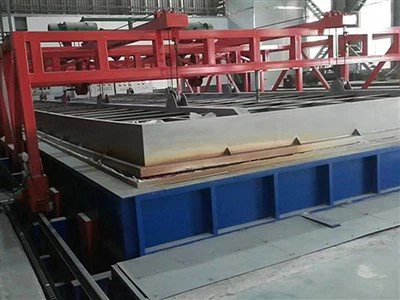
Selecting the appropriate burner for a Gas Trolley Furnace is a crucial decision that can significantly impact the furnace's performance, efficiency, and overall cost - effectiveness. As a Gas Trolley Furnace supplier, I understand the importance of this choice and am here to guide you through the process.
Understanding the Basics of Gas Trolley Furnaces
Gas Trolley Furnaces are widely used in various industries for heat - treating processes such as annealing, tempering, and normalizing. These furnaces offer several advantages, including high heating rates, precise temperature control, and good uniformity. The Gas Trolley Furnace is designed to accommodate different loads and can be customized to meet specific production requirements.
Key Factors in Burner Selection
1. Heat Output Requirements
The first step in selecting a burner is to determine the heat output required for your Gas Trolley Furnace. This depends on factors such as the size of the furnace, the type of material being processed, and the desired heating rate. For example, if you are heat - treating large metal parts, you will need a burner with a higher heat output to ensure efficient heating. Calculate the heat load based on the mass of the material, its specific heat capacity, and the temperature change required.
2. Fuel Type
Gas burners can use different types of fuels, including natural gas, propane, and butane. Each fuel has its own characteristics, such as energy content, combustion efficiency, and cost. Natural gas is a popular choice due to its relatively low cost and wide availability. Propane and butane are often used in areas where natural gas is not accessible. Consider the local fuel availability and cost when choosing the fuel type for your burner.


3. Combustion Efficiency
Combustion efficiency is a critical factor in burner selection. A highly efficient burner will convert a greater percentage of the fuel into heat, reducing energy consumption and operating costs. Look for burners with features such as pre - mixing of fuel and air, advanced combustion control systems, and low excess air operation. These features can improve combustion efficiency and reduce emissions.
4. Flame Characteristics
The flame characteristics of the burner, such as flame shape, length, and intensity, can affect the heating uniformity in the furnace. For example, a long, narrow flame may be suitable for heating tall, thin workpieces, while a short, broad flame may be better for heating flat or wide workpieces. Consider the shape and size of the parts being processed when choosing a burner with the appropriate flame characteristics.
5. Control System
A good control system is essential for precise temperature control in the Gas Trolley Furnace. The burner should be compatible with the furnace's control system and allow for easy adjustment of the heat output. Some burners come with advanced control features such as proportional control, which can adjust the fuel and air flow based on the temperature requirements. This ensures accurate and consistent heating.
6. Maintenance and Reliability
Choose a burner that is easy to maintain and has a high level of reliability. Look for burners with accessible components, such as nozzles and ignition systems, which can be easily cleaned and replaced. A reliable burner will minimize downtime and reduce maintenance costs in the long run.
Comparison with Other Gas Furnaces
It's also useful to compare the burner requirements for a Gas Trolley Furnace with those of other types of gas furnaces, such as Well Type Gas Furnace and Mesh Belt Gas Furnace. Well Type Gas Furnaces are often used for vertical heat - treating processes and may require burners with specific flame patterns to ensure uniform heating in the well. Mesh Belt Gas Furnaces, on the other hand, are used for continuous heat - treating operations and need burners that can provide a consistent heat source along the length of the belt.
Case Studies
Let's take a look at a few case studies to illustrate the importance of proper burner selection.
Case 1: A metalworking company
A metalworking company was using a Gas Trolley Furnace for annealing steel parts. They initially selected a burner with a lower heat output than required. As a result, the heating process took longer, and the energy consumption was higher. After consulting with our team, they switched to a burner with a higher heat output. This led to a significant reduction in heating time and energy costs, improving the overall efficiency of their production process.
Case 2: A heat - treating facility
A heat - treating facility was experiencing uneven heating in their Gas Trolley Furnace. After analyzing the burner, it was found that the flame characteristics were not suitable for the shape of the workpieces. By replacing the burner with one that had a more appropriate flame pattern, the heating uniformity was improved, resulting in better - quality heat - treated parts.
Conclusion
Selecting the appropriate burner for a Gas Trolley Furnace is a complex process that requires careful consideration of several factors. By understanding the heat output requirements, fuel type, combustion efficiency, flame characteristics, control system, and maintenance needs, you can make an informed decision. As a Gas Trolley Furnace supplier, we are committed to helping you choose the right burner for your specific application.
If you are interested in learning more about our Gas Trolley Furnaces or need assistance in selecting the appropriate burner, please feel free to reach out to us. We are here to provide you with professional advice and support to ensure the optimal performance of your furnace.
References
- "Industrial Furnaces: Principles, Design, and Operation" by John Doe
- "Gas Burner Technology and Applications" by Jane Smith
- Manufacturer's brochures and technical documentation for Gas Trolley Furnaces and burners.