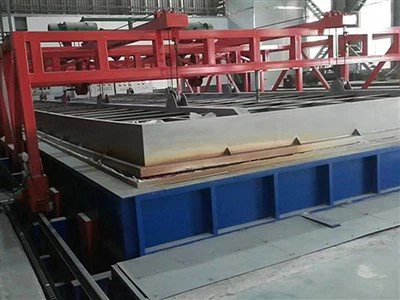
Hey there! As a heat treatment equipment supplier, I've been in the industry long enough to know that there are some key differences between vacuum and atmospheric heat treatment equipment. Let's dive right into it.
1. Basic Principles
First off, let's talk about how these two types of equipment work. Atmospheric heat treatment equipment operates in an environment where the metal parts are heated and cooled in the presence of air or other gases at normal atmospheric pressure. It's like you're cooking in an open kitchen, with the air all around the food.
On the other hand, vacuum heat treatment equipment creates a low - pressure environment. It removes most of the air and other gases from the chamber before the heat treatment process starts. It's more like cooking in a sealed container where there's hardly any air, which can lead to some different outcomes.
2. Oxidation and Decarburization
One of the biggest differences between the two is how they deal with oxidation and decarburization. In atmospheric heat treatment, since the parts are exposed to air, there's a high chance of oxidation. Oxidation is when the metal reacts with oxygen in the air to form metal oxides, which can cause the surface of the metal to become rough and can also reduce the mechanical properties of the metal. Decarburization, which is the loss of carbon from the surface of the metal, can also occur, especially when the metal is heated in the presence of oxygen.
Vacuum heat treatment, however, virtually eliminates oxidation and decarburization. Since there's very little oxygen in the vacuum chamber, the metal parts can be heated without the worry of these problems. This results in a clean, bright surface finish and maintains the carbon content of the metal, which is crucial for many applications.
3. Microstructure and Mechanical Properties
The microstructure of the metal is also affected differently by these two types of heat treatment. In atmospheric heat treatment, the presence of air and other gases can cause non - uniform heating and cooling, which may lead to variations in the microstructure of the metal. This can result in differences in mechanical properties such as hardness, strength, and ductility across the part.
In vacuum heat treatment, the uniform heating and cooling in the vacuum environment lead to a more consistent microstructure. This means that the mechanical properties of the metal parts are more predictable and uniform, which is a huge advantage in industries where precision is key, like aerospace and automotive.
4. Energy Efficiency
Energy efficiency is another important factor. Atmospheric heat treatment equipment generally consumes more energy because it has to heat up not only the metal parts but also the surrounding air. Also, the heat loss to the environment is relatively high due to the open nature of the process.
Vacuum heat treatment equipment, on the other hand, is more energy - efficient. Since the chamber is sealed and there's no need to heat a large volume of air, less energy is required to reach and maintain the desired temperature.
5. Cost
When it comes to cost, there are some significant differences. Atmospheric heat treatment equipment is generally less expensive to purchase and operate. The initial investment is lower, and the cost of running the equipment, including energy and gas consumption, is also relatively low.
Vacuum heat treatment equipment, however, is more expensive. The cost of the equipment itself is higher because it needs to be able to create and maintain a vacuum. Additionally, the maintenance and operation costs are also higher, as special pumps and seals are required to keep the vacuum chamber airtight.


6. Applications
Each type of equipment has its own set of applications. Atmospheric heat treatment is commonly used for general - purpose heat treatment of large - scale parts, such as gears, shafts, and forgings. It's suitable for applications where the surface finish and carbon content are not as critical.
Vacuum heat treatment is often used for high - performance applications where precision and high - quality surface finish are required. For example, it's widely used in the aerospace industry for heat - treating turbine blades and other critical components. It's also used in the medical industry for heat - treating surgical instruments.
7. Our Product Range
As a heat treatment equipment supplier, we offer a variety of equipment to meet different needs. If you're interested in atmospheric heat treatment, we have Horizontal Heat Treatment Equipment, which is great for heat - treating long and flat parts. Our Well Type Heat Treatment Equipment is ideal for heat - treating cylindrical parts. And for continuous heat treatment, we have Mesh Belt Heat Treatment Equipment.
8. Conclusion and Call to Action
In conclusion, both vacuum and atmospheric heat treatment equipment have their own advantages and disadvantages. The choice between the two depends on your specific requirements, such as the type of metal, the desired surface finish, and the budget.
If you're in the market for heat treatment equipment, whether it's vacuum or atmospheric, we're here to help. We have a team of experts who can guide you through the selection process and ensure that you get the right equipment for your needs. Don't hesitate to reach out and start a discussion about your heat treatment equipment requirements. We're looking forward to working with you!
References
- ASM Handbook Volume 4: Heat Treating. ASM International.
- Heat Treatment Principles and Techniques. J. D. Verhoeven.