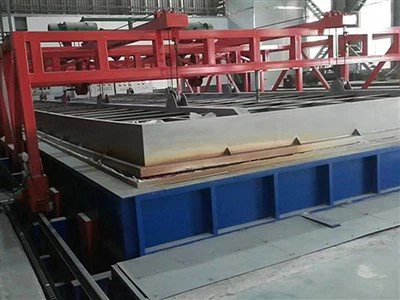
As a well - established supplier of Well Type Resistance Furnaces, I am often asked about the pre - heating process in these essential industrial equipment. In this blog, I will comprehensively explain what the pre - heating process in a Well Type Resistance Furnace is, its importance, and how it impacts the overall performance of the furnace.
What is a Well Type Resistance Furnace?
Before delving into the pre - heating process, let's briefly introduce the Well Type Resistance Furnace. This type of furnace is designed with a vertical well - shaped chamber where the heating elements are arranged around the well. It is widely used in various industries for heat treatment processes such as annealing, tempering, and hardening of metals. Its vertical design allows for efficient use of space and provides uniform heating throughout the workpiece. You can learn more about Well Type Resistance Furnaces by visiting our product page Well Type Resistance Furnace.
The Concept of Pre - heating
Pre - heating in a Well Type Resistance Furnace refers to the initial phase of the heating cycle where the furnace is gradually brought up to a specific temperature before the actual heat treatment process begins. This is not an instantaneous process but a carefully controlled one, which involves a slow and steady increase in temperature.
Why is Pre - heating Necessary?
1. Stress Relief
When a cold workpiece is suddenly exposed to high temperatures, thermal stress can occur. This stress can lead to cracking or distortion of the workpiece. Pre - heating helps to gradually increase the temperature of the workpiece, reducing the thermal gradient between the surface and the interior of the material. As a result, the risk of stress - related damage is significantly minimized.
2. Uniform Heating
Pre - heating ensures that the entire workpiece reaches a relatively uniform temperature before the main heat treatment process. This is crucial for achieving consistent mechanical properties throughout the material. If the workpiece is not pre - heated properly, some parts may heat up faster than others, leading to uneven hardness, strength, and other properties.
3. Protection of Heating Elements
The heating elements in a Well Type Resistance Furnace are sensitive to rapid temperature changes. Pre - heating the furnace slowly helps to protect these elements from thermal shock, which can cause premature failure. By allowing the heating elements to reach their operating temperature gradually, their lifespan can be extended, reducing maintenance costs and downtime.
The Pre - heating Process Step by Step
1. Initial Setup
Before starting the pre - heating process, the furnace must be properly prepared. This includes checking the furnace for any signs of damage or malfunction, ensuring that the heating elements are in good condition, and loading the workpiece into the well. It is also important to set the target pre - heating temperature based on the requirements of the heat treatment process.
2. Low - power Heating
Once the furnace is ready, the pre - heating process begins with low - power heating. The heating elements are activated at a relatively low power level to start raising the temperature of the furnace gradually. This slow start helps to prevent thermal shock to both the workpiece and the heating elements.
3. Temperature Monitoring
During the pre - heating process, continuous temperature monitoring is essential. Temperature sensors are installed in the furnace to measure the temperature inside the well. These sensors provide real - time data, which is used to control the power supply to the heating elements. If the temperature rises too quickly, the power can be adjusted to slow down the heating rate.
4. Soaking Period
Once the pre - heating temperature is reached, a soaking period is usually required. This is a period of time during which the furnace is maintained at the pre - heating temperature to ensure that the workpiece reaches a uniform temperature throughout. The duration of the soaking period depends on the size and material of the workpiece.
5. Transition to Main Heat Treatment
After the soaking period, the furnace can be further heated to the temperature required for the main heat treatment process. This transition should also be carefully controlled to avoid sudden temperature changes.
Comparison with Other Furnace Types
It is interesting to compare the pre - heating process in a Well Type Resistance Furnace with other types of furnaces, such as the Electric Rotary Drum Furnace for Heat Treatment and the Rotary Resistance Furnace.
In a rotary drum furnace, the pre - heating process may be different due to the rotating nature of the drum. The rotation helps to distribute the heat more evenly, but it also requires careful control to ensure that the workpiece is pre - heated uniformly. The pre - heating rate in a rotary drum furnace may be faster in some cases, but it still needs to be adjusted according to the material and size of the workpiece.
In a rotary resistance furnace, the pre - heating process is also influenced by the rotation of the furnace. The rotation can enhance the heat transfer between the heating elements and the workpiece, but proper pre - heating is still necessary to avoid thermal stress.


Factors Affecting the Pre - heating Process
1. Workpiece Material
Different materials have different thermal properties, such as thermal conductivity and specific heat capacity. These properties determine how quickly the material can absorb and transfer heat. For example, metals with high thermal conductivity, such as copper and aluminum, may require a shorter pre - heating time compared to materials with low thermal conductivity, such as some alloys.
2. Workpiece Size
The size of the workpiece also plays a significant role in the pre - heating process. Larger workpieces require more time to heat up evenly compared to smaller ones. This is because the heat needs to penetrate deeper into the material to reach a uniform temperature.
3. Furnace Capacity
The capacity of the Well Type Resistance Furnace affects the pre - heating process. A larger furnace may take longer to pre - heat due to the larger volume of air and the greater amount of material to be heated. It is important to match the furnace capacity with the size and quantity of the workpieces to ensure efficient pre - heating.
Importance of Proper Pre - heating in Industrial Applications
In industrial applications, proper pre - heating in a Well Type Resistance Furnace is crucial for ensuring the quality and reliability of the heat - treated products. For example, in the aerospace industry, where high - precision components are required, any defect caused by improper pre - heating can lead to catastrophic failures. In the automotive industry, pre - heating helps to improve the strength and durability of engine components, reducing the risk of premature wear and tear.
Conclusion
The pre - heating process in a Well Type Resistance Furnace is a critical step in the heat treatment process. It helps to reduce thermal stress, ensure uniform heating, and protect the heating elements. By understanding the pre - heating process and its influencing factors, manufacturers can optimize the performance of their furnaces and produce high - quality heat - treated products.
If you are interested in purchasing a Well Type Resistance Furnace or have any questions about the pre - heating process, please feel free to contact us for a detailed discussion. Our team of experts is ready to provide you with professional advice and solutions tailored to your specific needs.
References
- "Heat Treatment Principles and Techniques" by George E. Totten, David Scott MacKenzie, and J. L. Hendrickson.
- "Industrial Furnaces: Principles, Design, and Operation" by J. F. Elliott.