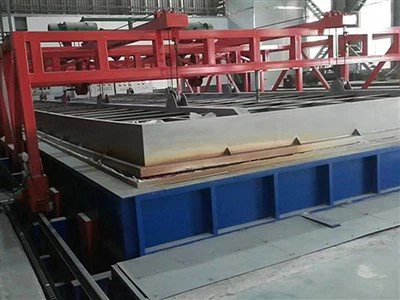
What is the heat transfer mechanism in rotary heat treatment equipment? As a supplier of Rotary Heat Treatment Equipment, I've spent a lot of time digging into this topic. Let's break it down and see how heat moves around in these cool machines.
The Basics of Heat Transfer
Before we jump into the rotary stuff, let's quickly go over the three main ways heat can move: conduction, convection, and radiation.
Conduction is like when you touch a hot pan. The heat moves from the pan to your hand because the molecules in the pan are vibrating and passing that energy to the molecules in your hand. It's all about direct contact.
Convection is when heat is transferred by the movement of a fluid, like air or water. Think of a pot of boiling water. The hot water at the bottom rises, and the cooler water at the top sinks, creating a cycle that spreads the heat.
Radiation is different. It doesn't need a medium to travel through. The sun heats the Earth through radiation. Heat is sent out in the form of electromagnetic waves.
Heat Transfer in Rotary Heat Treatment Equipment
In rotary heat treatment equipment, all three of these heat transfer methods come into play.
Conduction
In our rotary equipment, conduction happens when the workpiece comes into direct contact with the heating elements or the inner surface of the rotary chamber. The heat from the hot parts of the equipment is transferred to the cooler workpiece. For example, if we're heat-treating a metal part, the metal will start to heat up as it touches the heated walls of the chamber. The rate of conduction depends on the thermal conductivity of the materials involved. Metals usually have high thermal conductivity, which means they can absorb heat quickly.
Convection
Convection is a big deal in rotary heat treatment. As the chamber rotates, it creates a movement of the gas inside. This movement helps to distribute the heat more evenly. The hot gases rise, and the cooler gases sink, just like in that pot of boiling water. We can also use fans to enhance this convection process. By blowing air around the chamber, we can make sure that every part of the workpiece gets heated properly. This is especially important when we're dealing with large or complex-shaped workpieces.
Radiation
Radiation also plays a role. The heating elements in the rotary equipment emit heat in the form of radiation. This heat can travel through the air in the chamber and reach the workpiece. Even if the workpiece isn't in direct contact with the heating elements, it can still absorb the radiated heat. This is useful for heating hard-to-reach areas of the workpiece.
Advantages of Rotary Heat Treatment Equipment
Now that we know how the heat transfer works, let's talk about why rotary heat treatment equipment is so great.
One of the main advantages is the uniform heating. Because of the rotation and the combination of conduction, convection, and radiation, the workpiece gets heated evenly. This is crucial for heat treatment processes, as uneven heating can lead to defects in the final product.
Another advantage is the efficiency. The rotary motion helps to speed up the heat transfer process. The continuous movement of the workpiece exposes different parts to the heat source, reducing the overall heating time.
Comparing with Other Types of Heat Treatment Equipment
There are other types of heat treatment equipment out there, like Horizontal Heat Treatment Equipment, Well Type Heat Treatment Equipment, and Vertical Heat Treatment Equipment. Each has its own pros and cons.
Horizontal heat treatment equipment is great for long, flat workpieces. It allows for easy loading and unloading, and the horizontal orientation can be beneficial for certain heat treatment processes.
Well type heat treatment equipment is often used for deep, cylindrical workpieces. The well shape provides a controlled environment for heating and cooling.


Vertical heat treatment equipment is useful for tall workpieces. It can save floor space and provide a stable heating environment.
However, rotary heat treatment equipment offers a unique combination of uniform heating and efficiency that makes it a popular choice for many applications.
Factors Affecting Heat Transfer in Rotary Equipment
There are a few factors that can affect how well the heat transfer works in rotary heat treatment equipment.
The speed of rotation is one factor. If the rotation is too slow, the heat may not be distributed evenly. If it's too fast, the workpiece may experience excessive vibration, which can also affect the heat treatment process.
The temperature of the heating elements is another important factor. We need to make sure that the heating elements are at the right temperature to achieve the desired heat treatment results.
The type of gas used in the chamber can also affect heat transfer. Some gases have better thermal conductivity than others, which can impact how quickly the heat is transferred to the workpiece.
Conclusion
So, there you have it - the heat transfer mechanism in rotary heat treatment equipment. It's a combination of conduction, convection, and radiation that allows for efficient and uniform heating of workpieces. If you're in the market for heat treatment equipment, rotary heat treatment equipment is definitely worth considering.
If you're interested in learning more about our Rotary Heat Treatment Equipment or want to discuss your specific heat treatment needs, feel free to reach out. We're here to help you find the best solution for your business.
References
- Incropera, F. P., & DeWitt, D. P. (2002). Fundamentals of Heat and Mass Transfer. John Wiley & Sons.
- Holman, J. P. (2002). Heat Transfer. McGraw-Hill.