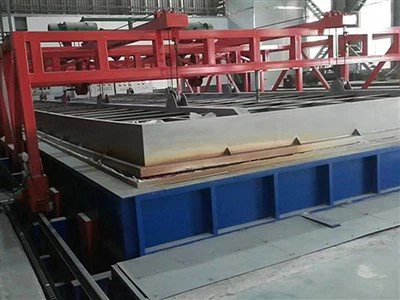
As a supplier of Pit Type Resistance Furnaces, I often encounter inquiries regarding the temperature accuracy of these essential industrial heating devices. Temperature accuracy is a critical factor in many industrial processes, as it directly impacts the quality and consistency of the end products. In this blog, I will delve into the concept of temperature accuracy in Pit Type Resistance Furnaces, exploring its importance, the factors that influence it, and how we ensure high - precision temperature control in our products.
Understanding Temperature Accuracy in Pit Type Resistance Furnaces
Temperature accuracy refers to the degree to which the actual temperature inside the furnace matches the set temperature. In industrial applications, even a small deviation from the desired temperature can lead to significant problems. For example, in heat - treating processes, an inaccurate temperature can result in improper material hardening or softening, leading to sub - standard mechanical properties of the treated parts.
In a Pit Type Resistance Furnace, temperature accuracy is typically expressed as a tolerance value, such as ±1°C or ±5°C. This means that the actual temperature inside the furnace can deviate from the set temperature by up to the specified tolerance. A lower tolerance indicates higher temperature accuracy.
Importance of Temperature Accuracy
The importance of temperature accuracy in Pit Type Resistance Furnaces cannot be overstated. In industries such as aerospace, automotive, and electronics, where precision is paramount, accurate temperature control is essential for producing high - quality components.
In the aerospace industry, for instance, heat - treated parts need to meet strict specifications to ensure the safety and performance of aircraft. Any deviation in temperature during the heat - treatment process can compromise the integrity of these parts, leading to potential failures. Similarly, in the electronics industry, precise temperature control is crucial for processes like soldering and annealing, where even a slight temperature variation can affect the electrical properties of the components.


Factors Affecting Temperature Accuracy
Several factors can influence the temperature accuracy of a Pit Type Resistance Furnace. Understanding these factors is key to ensuring optimal performance.
Heating Elements
The quality and design of the heating elements play a significant role in temperature accuracy. High - quality heating elements with uniform heat distribution can help maintain a consistent temperature throughout the furnace. At our company, we use advanced heating elements made from high - grade materials to ensure efficient and precise heating.
Insulation
Proper insulation is essential for minimizing heat loss and maintaining a stable temperature inside the furnace. A well - insulated furnace can reduce the impact of external factors on the internal temperature, resulting in better temperature accuracy. Our Pit Type Resistance Furnaces are equipped with high - performance insulation materials to ensure minimal heat leakage.
Temperature Sensors
Accurate temperature measurement is crucial for maintaining temperature accuracy. High - quality temperature sensors, such as thermocouples or resistance temperature detectors (RTDs), are used to monitor the temperature inside the furnace. These sensors provide real - time feedback to the control system, allowing for precise temperature adjustment. We use state - of - the - art temperature sensors in our furnaces to ensure accurate temperature monitoring.
Control System
The control system of the furnace is responsible for regulating the temperature based on the setpoint. A sophisticated control system can adjust the power supply to the heating elements in real - time, compensating for any temperature deviations. Our Pit Type Resistance Furnaces are equipped with advanced control systems that offer precise temperature control and can be customized to meet the specific requirements of different applications.
Ensuring High Temperature Accuracy in Our Pit Type Resistance Furnaces
As a supplier, we take several steps to ensure high temperature accuracy in our Pit Type Resistance Furnaces.
Quality Manufacturing
We adhere to strict quality control standards during the manufacturing process. From the selection of raw materials to the final assembly, every step is carefully monitored to ensure that the furnace meets the highest quality standards. Our manufacturing facilities are equipped with advanced machinery and technology, allowing us to produce furnaces with precise dimensions and reliable performance.
Calibration and Testing
Before leaving the factory, each furnace undergoes rigorous calibration and testing to ensure accurate temperature control. We use calibrated temperature sensors and reference standards to verify the temperature accuracy of the furnace. Any deviations are corrected through fine - tuning of the control system.
Customization
We understand that different industries have different temperature accuracy requirements. Therefore, we offer customized solutions to meet the specific needs of our customers. Whether it's a high - precision application in the aerospace industry or a more general heat - treating process, we can tailor our Pit Type Resistance Furnaces to provide the required temperature accuracy.
Comparison with Other Types of Resistance Furnaces
In addition to Pit Type Resistance Furnaces, there are other types of resistance furnaces available in the market, such as Vertical Resistance Furnace and Horizontal Resistance Furnace. Each type has its own advantages and disadvantages in terms of temperature accuracy.
Vertical Resistance Furnaces are often used for applications where space is limited. They can provide good temperature accuracy, especially when equipped with proper insulation and a reliable control system. However, the vertical design may introduce some challenges in terms of heat distribution, which can affect the overall temperature accuracy.
Horizontal Resistance Furnaces, on the other hand, offer better heat distribution due to their horizontal layout. This can result in higher temperature accuracy in some applications. However, they may require more floor space compared to Pit Type Resistance Furnaces.
Pit Type Resistance Furnaces are well - suited for applications where a large - volume load needs to be heated uniformly. The vertical design of the pit allows for efficient heat transfer and good temperature uniformity, resulting in high temperature accuracy.
Contact Us for Purchase and Consultation
If you are in the market for a Pit Type Resistance Furnace or have any questions about temperature accuracy and other technical aspects, we are here to help. Our team of experts can provide you with detailed information about our products and assist you in selecting the right furnace for your specific application. We are committed to providing high - quality products and excellent customer service. Please feel free to contact us to discuss your requirements and start the procurement process.
References
- Smith, J. (2018). Industrial Furnace Technology. New York: Industrial Press.
- Johnson, R. (2020). Temperature Control in Resistance Furnaces. Journal of Industrial Heating, 45(2), 32 - 40.
- Brown, A. (2019). Advances in Furnace Insulation Materials. International Journal of Thermal Engineering, 25(3), 123 - 135.