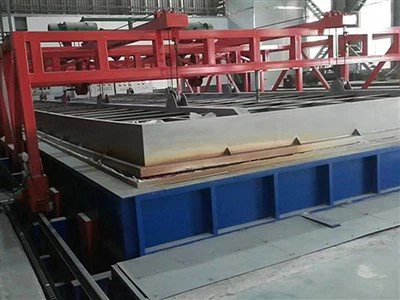
What is the heating rate of rotary heat treatment equipment?
As a leading supplier of Rotary Heat Treatment Equipment, I often encounter inquiries about the heating rate of our products. The heating rate is a critical parameter in heat treatment processes, significantly influencing the quality, efficiency, and cost of the final product. In this blog, I will delve into the concept of the heating rate of rotary heat treatment equipment, its influencing factors, and its importance in industrial applications.
Understanding the Heating Rate
The heating rate refers to the speed at which the temperature of the workpiece or the interior of the equipment increases during the heat treatment process. It is usually measured in degrees Celsius per minute (°C/min) or degrees Fahrenheit per minute (°F/min). A higher heating rate means that the workpiece can reach the desired temperature more quickly, while a lower heating rate implies a slower temperature increase.
In rotary heat treatment equipment, the heating rate is determined by several factors, including the power of the heating element, the thermal conductivity of the workpiece and the equipment materials, the volume and shape of the workpiece, and the heat transfer mechanism within the equipment.
Influencing Factors of the Heating Rate
1. Power of the Heating Element
The power of the heating element is one of the most important factors affecting the heating rate. A higher - power heating element can generate more heat in a unit of time, thus increasing the heating rate. For example, if we use a high - power electric heating element in our rotary heat treatment equipment, it can quickly transfer a large amount of heat to the workpiece, enabling it to reach the target temperature rapidly.
2. Thermal Conductivity
The thermal conductivity of the workpiece and the equipment materials also plays a crucial role. Materials with high thermal conductivity can transfer heat more efficiently. For instance, metals generally have high thermal conductivity, so when heat treating metal workpieces, the heat can be transferred quickly within the workpiece. In contrast, non - metallic materials with low thermal conductivity may require a lower heating rate to ensure uniform heating.
3. Volume and Shape of the Workpiece
The volume and shape of the workpiece have a significant impact on the heating rate. Larger and more complex - shaped workpieces require more time to heat up evenly. A large - volume workpiece has a greater heat capacity, which means more heat is needed to raise its temperature. Similarly, a workpiece with a complex shape may have uneven heat distribution, and a slower heating rate may be necessary to avoid thermal stress and ensure uniform heating.
4. Heat Transfer Mechanism
The heat transfer mechanism within the rotary heat treatment equipment includes conduction, convection, and radiation. Conduction occurs when heat is transferred through direct contact between the heating element and the workpiece. Convection involves the transfer of heat through the movement of a fluid (such as air or a liquid). Radiation is the transfer of heat through electromagnetic waves. The combination of these heat transfer mechanisms affects the overall heating rate. For example, in a well - insulated rotary heat treatment equipment, radiation may play a more important role in heat transfer, and optimizing the radiation characteristics can improve the heating rate.
Importance of the Heating Rate in Industrial Applications
1. Product Quality
The heating rate has a direct impact on the quality of the heat - treated product. A proper heating rate can ensure uniform microstructure and mechanical properties of the workpiece. If the heating rate is too high, it may cause thermal stress, cracking, or uneven hardness in the workpiece. On the other hand, a very low heating rate may lead to excessive grain growth, reducing the strength and toughness of the material. Therefore, selecting an appropriate heating rate is crucial for achieving high - quality heat - treated products.
2. Production Efficiency
A higher heating rate can significantly improve production efficiency. By reducing the time required to heat the workpiece, more products can be processed in a given period. This is especially important in large - scale industrial production, where time is of the essence. For example, in the automotive industry, where a large number of parts need to be heat - treated, a high - speed rotary heat treatment equipment with an appropriate heating rate can increase the production output and meet the market demand.
3. Energy Consumption
The heating rate also affects energy consumption. A reasonable heating rate can optimize energy utilization. If the heating rate is too low, the equipment may need to operate for a longer time, consuming more energy. Conversely, an excessively high heating rate may require more powerful heating elements, which also increases energy consumption. Therefore, finding the optimal heating rate can help reduce energy costs and make the production process more environmentally friendly.


Comparison with Other Heat Treatment Equipment
In addition to rotary heat treatment equipment, there are other types of heat treatment equipment available in the market, such as Well Type Heat Treatment Equipment, Bogie Type Heat Treatment Furnace, and Vertical Heat Treatment Equipment. Each type of equipment has its own characteristics in terms of heating rate.
Well - type heat treatment equipment usually has a relatively slow heating rate due to its structure and heat transfer mode. It is more suitable for heat - treating large - scale and long - shaped workpieces, where a slow and uniform heating process is required. Bogie - type heat treatment furnaces can have a relatively high heating rate, especially when equipped with powerful heating elements. They are often used for batch processing of medium - sized workpieces. Vertical heat treatment equipment can also achieve a certain heating rate, and its vertical structure allows for efficient heat transfer in some cases.
Compared with these equipment, rotary heat treatment equipment has the advantage of continuous operation and relatively high heating efficiency. The rotation of the equipment can ensure more uniform heat distribution, which is beneficial for improving the heating rate and the quality of the heat - treated products.
Conclusion
The heating rate of rotary heat treatment equipment is a complex parameter that is affected by multiple factors. Understanding these factors and their interactions is crucial for optimizing the heat treatment process. A proper heating rate can improve product quality, increase production efficiency, and reduce energy consumption.
As a supplier of Rotary Heat Treatment Equipment, we are committed to providing high - quality products with optimal heating rates. Our equipment is designed to meet the diverse needs of different industries, ensuring that our customers can achieve the best heat treatment results.
If you are interested in our Rotary Heat Treatment Equipment or have any questions about the heating rate or other aspects of heat treatment, please feel free to contact us for procurement and negotiation. We look forward to working with you to achieve your heat treatment goals.
References
- Smith, J. (2018). Heat Treatment Handbook. Elsevier.
- Jones, A. (2019). Advanced Heat Treatment Technologies. Wiley.
- Brown, C. (2020). Principles of Heat Transfer in Industrial Furnaces. Springer.